
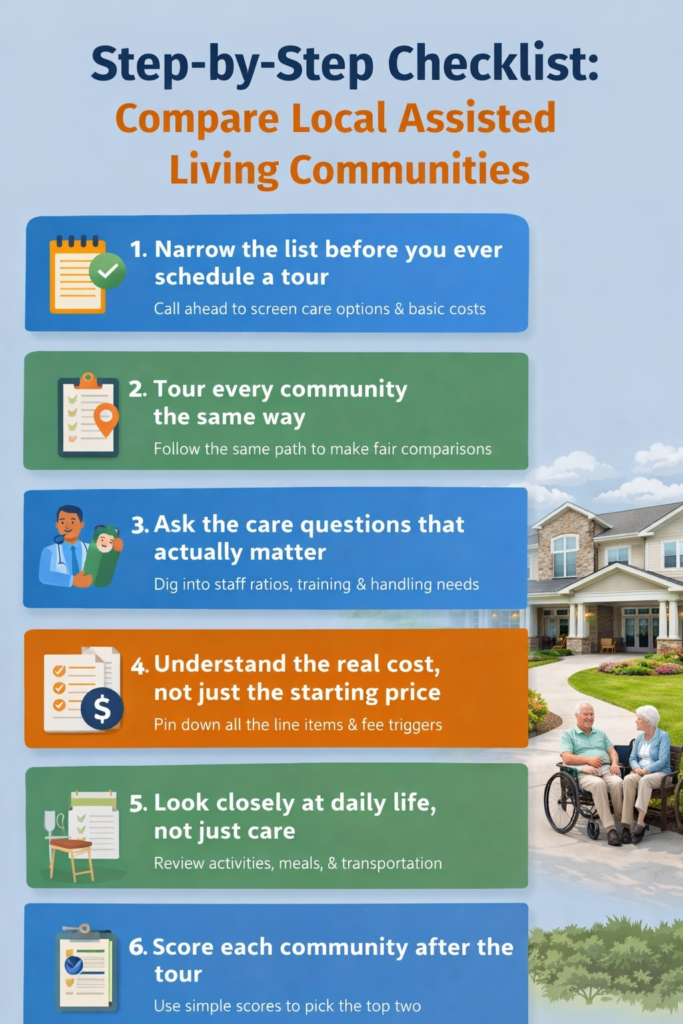
Choosing an assisted living community is one of those decisions that feels overwhelming fast. Every place looks polished on the tour. Every brochure promises great care. And most families leave thinking, They all seemed fine… so now what?
This checklist is designed to cut through that fog.
Instead of relying on gut feelings or sales presentations, you’ll walk away with a clear, repeatable way to compare assisted living communities side by side, based on what actually affects safety, cost, and daily life.
Bring this with you. Take notes. Score every place the same way.
Step 1: Narrow the list before you ever schedule a tour
Before you step inside a building, make sure it even deserves your time.
Call each community and ask these questions upfront:
- Do you currently have availability, and what is the realistic move in timeline
- What levels of care do you provide, and what do you not handle
- How does pricing work. Is it all inclusive, tiered, or add-on based
- Can you provide a sample contract and fee schedule before a tour
- Do you accept long term care insurance, and how does billing work
If a community avoids answering basic cost or care questions on the phone, that usually does not improve in person. Move it down the list.
Aim to tour three to five communities, no more. More than that creates confusion, not clarity.
Step 2: Tour every community the same way
Consistency matters. Take the same route in every building so you can make fair comparisons.
Pay attention before anyone starts talking.
- Does the building smell clean or just heavily scented
- Do residents look engaged or parked in common areas
- Do staff greet residents by name without prompting
- Are call buttons clearly visible in apartments and bathrooms
- Are floors safe for walkers and wheelchairs without clutter or rugs
Ask to see a real apartment that is currently occupied or was recently used. Model units hide noise, wear, and layout issues.
Step 3: Ask the care questions that actually matter
This is where many tours get vague. Do not accept vague answers.
Ask these questions directly:
- What is the staff to resident ratio during day and night shifts
- What training do caregivers receive, and how often is it refreshed
- How is a care plan created, updated, and communicated to families
- How does medication management work, and how are missed doses handled
- What happens if care needs increase. Who decides, and how quickly do costs change
- What is the exact process if a resident falls or has a medical emergency
You are not being difficult. You are protecting your parent.
If answers feel rehearsed or evasive, trust that signal.
Step 4: Understand the real cost, not just the starting price
Many families compare monthly rates and miss the details that drive future cost increases.
Make sure you understand:
- What services are included in the base monthly fee
- What costs extra. Ask specifically about bathing help, toileting, incontinence care, transportation, and medications
- How often rates increase and how much notice is given
- Whether there are move in fees, community fees, or deposits, and if they are refundable
- What happens if the resident is hospitalized. Is there a bed hold fee
- Under what conditions a resident could be asked to move out
- What happens if the resident runs out of money
Ask for all of this in writing. If possible, review the contract with an elder law attorney before signing.
Step 5: Look closely at daily life, not just care
Care keeps someone safe. Daily life determines whether they thrive.
Ask to see:
- The current activities calendar, not a sample
- How meals work, including special diets and preferences
- How transportation works for medical appointments and errands
- What a typical weekday actually looks like for residents
- How new residents are helped socially during the first few weeks
If faith, routines, or independence matter to your parent, ask how those are supported.
Step 6: Score each community immediately after the tour
Do not wait until you get home. Sit in the car and score it while details are fresh.
Use a simple one to five scale for each category:
- Confidence in care quality
- Staff attentiveness and professionalism
- Safety and cleanliness
- Cost transparency and contract comfort
- Food, activities, and daily life fit
- Distance and ease of family visits
When you are done, your top two will usually be obvious.
Schedule a second visit to those two at a different time of day, ideally during a meal. What you see then often tells you more than any first tour.
The goal is clarity, not perfection
No assisted living community is perfect. The right choice is the one that balances safety, dignity, cost, and daily life in a way your family can sustain.
If you are still weighing assisted living against staying at home, this comparison guide can help you think through both paths side by side: