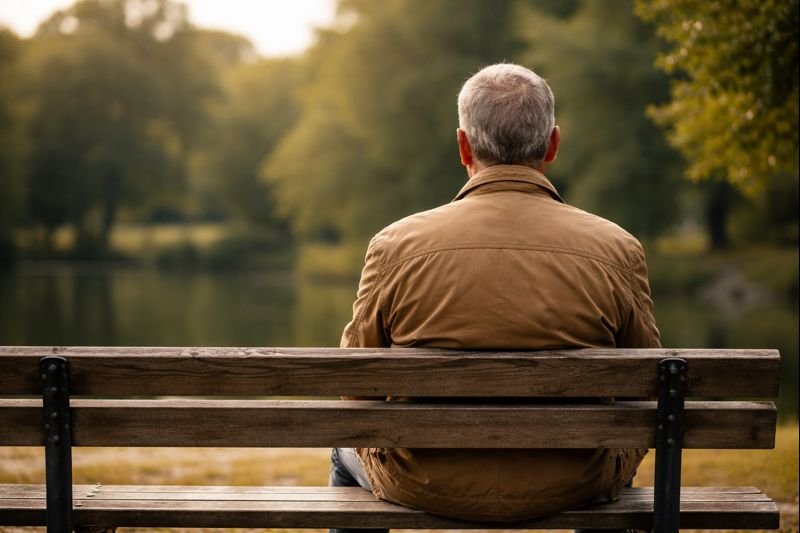
Living alone isn’t the problem. Self isolation is.
I live alone. I usually say that like it is just a fact, not a confession. No drama. No backstory. Just information.
And most days, living alone is fine. The house is quiet. The schedule is mine. There is no negotiating over small things. There is a kind of peace in that, especially after years of a busy, full household.
But living alone has a way of slowly changing the rhythm of your life if you are not paying attention.
Self isolation does not arrive as sadness. It arrives as comfort.
It starts with staying in because it is easier. Then you stop making plans because you do not want to be the one who reaches out. You tell yourself you enjoy your space. And maybe you do. Until space quietly turns into distance and distance turns into habit.
What makes this tricky is that the body adapts before the mind questions it.
When we spend long stretches alone without regular connection, our nervous system shifts a little. Cortisol, the stress hormone, can rise just enough to keep us slightly on edge. Not anxious exactly, just more alert, more guarded, more tired than we realize.
At the same time, dopamine, which helps with motivation and interest, can drop. Things do not feel awful. They just feel flatter. It takes more effort to get excited or curious.
Serotonin, which supports mood balance, can dip as well. That can show up as irritability or emotional numbness. Nothing dramatic. Just a sense that life feels a bit muted.
And then there is oxytocin, the bonding chemical. It is released through connection, conversation, laughter, shared moments. When we isolate, oxytocin simply has fewer chances to show up. The body does not panic about that. It just adjusts.
This is how mental health can drift instead of collapse.
Living alone makes that drift easier to miss.
There is an unfortunate reality here that deserves to be named gently. Adults who live alone do have higher suicide rates than those who live with others. In one large study, the rate for people living alone was about 23 per 100,000, compared to about 13 per 100,000 for those living with others. Nearly twice as high.

That statistic is not meant to scare anyone. Many people live alone and live full, meaningful lives. But it does remind us that long term isolation can carry real weight, especially when people go unseen for long periods of time.
The issue is not being alone. The issue is becoming invisible.
When you live with others, someone notices changes. If you skip meals. If you seem off. If you pull back. When you live alone, those small signals can fade into the background.
Over time, self isolation can subtly change how you relate to the world. You may reach out less because it feels awkward. You may convince yourself you are fine as things get quieter. Your world can slowly shrink, not out of sadness, but out of ease.
We often praise independence, especially as we age. Doing everything yourself is framed as strength. But independence without connection can quietly turn into isolation.
Living alone requires intention. Not because something is wrong, but because the structure that once created connection is no longer there. You have to choose connection instead of stumbling into it.
Money does not solve loneliness, but it can help create options. Options to go places. Options to join things. Options to say yes instead of staying in by default. Those options matter because they interrupt isolation before it becomes the norm.
What protects mental health over time is not constant happiness. It is connection, routine, and being noticed. Small things matter. A class. A regular coffee. A familiar face. A reason to leave the house even when you do not feel like it.
If you live alone, the goal is not to fill every quiet moment. It is to stay visible. To keep the balance from drifting too far inward. To make sure silence does not become the default setting.
Living alone is a circumstance. Self isolation is a slow drift that happens quietly.
Noticing it early makes all the difference.