
Planning your long-term care budget for the next 5–10 years isn’t just about numbers. It’s about peace of mind, knowing whether you can afford the care you want — at home or elsewhere. Long-term care costs rise for most people as they age, and knowing how to build a realistic budget now can save stress and prevent financial surprises later.
This guide walks through how to estimate your future care costs, plan for variables like inflation and insurance, and compare aging at home vs other care options.
Why Planning a Long-Term Care Budget Matters
Long-term care includes support for everyday activities like bathing, dressing, meals, transportation, and more. According to national surveys, average long-term care expenses can range widely depending on care type and location. For example, in-home care may cost thousands per month, while nursing homes or other residential care often cost significantly more per month.
A thoughtful budget can help you understand:
- What your real monthly cost for care might be in 5-10 years
- Whether aging at home is financially sustainable
- What funding sources (savings, insurance, government benefits) might cover
- When it may make financial sense to consider alternative care
Step 1: Understand the True Cost of Care Options
First, estimate the typical costs for the care you might need later:
In-Home Care
- In-home care prices vary by region and intensity of care.
- National surveys show home health aides costing several thousand dollars per month.
Assisted Living or Facility Care
- Assisted living costs can average several thousand dollars per month with variation by state and services included.
- Nursing homes tend to cost more, especially for private rooms.
Other Expenses to Consider
Care cost is only one part of the budget. Seniors often forget to include:
- Home modifications (ramps, rails, bathroom safety)
- Transportation
- Medical supplies or equipment
- Insurance premiums
- Legal or financial planning fees like power of attorney or wills
Step 2: Assess Your Current Financial Picture
Before projecting future costs, list your current finances:
Income sources
- Social Security
- Pension or retirement accounts
- Investments
- Rental income
Assets
- Home equity
- Savings accounts
- Other real estate holdings
Fixed expenses
- Mortgage or rent
- Utilities
- Healthcare premiums
This gives you the baseline from which care costs will be added.
Step 3: Project Your Long-Term Care Costs
Long-term care cost planning is as much art as science because you’re estimating into the future. Here’s how to approach it:
- Start with a base cost estimate
Use national averages as a starting point and local quotes for your area if possible. - Factor in inflation
Care costs have historically increased faster than general inflation. Consider adding a 3–5% annual increase in your projections. - Build in a buffer
Unexpected health changes or additional therapy services can add costs.
Example:
If you expect in-home care costs of $4,000 per month today, a 4% annual inflation rate means costs could exceed $6,000 per month in 10 years.
This projection helps you test whether aging at home fits your long-term financial plan.
Step 4: Explore Funding Options
Once you’ve estimated projected costs, it’s time to look at how you might pay for them.
Personal Savings
Many older adults pay some or all long-term care costs out of pocket using personal funds like savings or retirement accounts.
Long-Term Care Insurance
This specialized insurance can cover care costs once you meet benefit requirements. Premiums vary by age and health status.
Hybrid Policies
Some life insurance and annuity products include long-term care riders that pay out if care is needed.
Government Programs
Medicaid may help cover long-term care costs for those with limited assets, but eligibility rules vary by state. Medicare typically does not cover long-term care.
Step 5: Build Your Budget Framework
Now that you know possible costs and how to pay for them, create a simple budget structure you can update yearly:
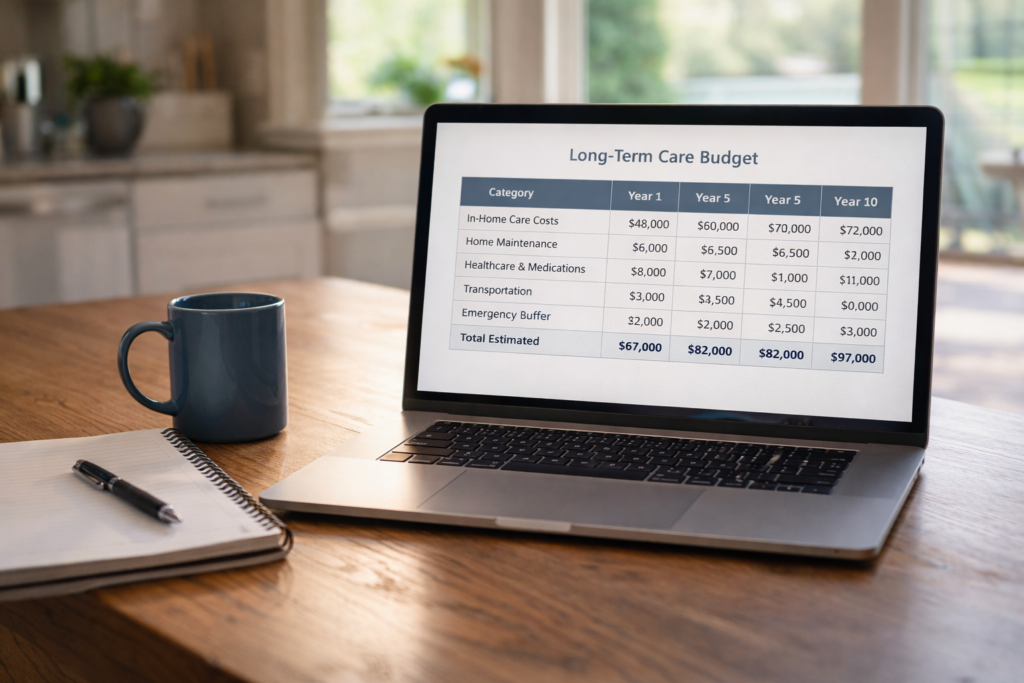
Example 10-Year Budget Template
| Category | Year 1 | Year 5 | Year 10 |
|---|---|---|---|
| In-Home Care Cost | $48,000 | $60,000 | $72,000 |
| Home Maintenance | $6,000 | $6,500 | $7,000 |
| Healthcare & Medications | $8,000 | $9,500 | $11,000 |
| Transportation | $3,000 | $3,500 | $4,000 |
| Emergency Buffer | $2,000 | $2,500 | $3,000 |
| Total Estimated | $67,000 | $82,000 | $97,000 |
This template gives you a framework and can be updated annually as your situation changes.
Step 6: Decide If Aging at Home Still Fits Your Budget
Now with a projected budget in hand, compare your estimated future expenses against your financial capacity:
Ask yourself:
- Do I have enough stable income and assets to cover these costs?
- Are there insurance or savings strategies that might close any gaps?
- Would assisted living or another care setting be more affordable or suitable given my needs?
If aging at home fits within your projected budget and gives you confidence and comfort, that’s a strong sign it’s the right choice. If it creates financial strain, exploring alternative care options or financial planning tools may be wise.
This is a great place to to make your own numbers even more precise, try this interactive calculator that helps you estimate future long-term care costs based on care type and location:
Long-Term Care Cost Calculator – SeniorLiving.org
Learn more about aging at home versus assisted living cost comparisons here
Final Takeaway
Building a realistic long-term care budget isn’t just a financial exercise. It’s a decision framework that helps you feel confident about whether aging at home fits your lifestyle, finances, and future needs. The sooner you start planning and updating your budget, the better positioned you’ll be to make decisions with clarity and peace of mind.